
Loran - Smith
Loran
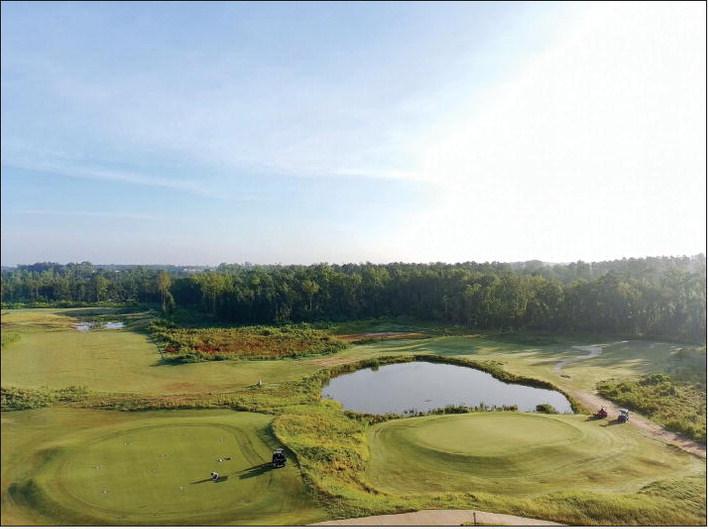
PONTE VEDRA – I came early for the weekend, as I always do when the football teams of Georgia and Florida meet in a rivalry game—which is one of the mostwatched college matchups of the year. In the past the ancillary reasons had as much to do with that routine as it was to get in the mood for the game. There were golf, fishing, and dining options that were attractive while winter’s chill was becoming entrenched in Athens. Then the centerpiece of the weekend— the game— swung back to the Red and Black, as it was in the thirties and forties.
Fast forward to today and you easily conclude that it has become a fall vacation for many Georgia fans who flock to the seaside resorts of Georgia and north Florida. With Gainesville, Florida, being only 70 miles south of Jacksonville, there are many Gator fans who can make attendance at the game an easy day trip.
That is why, with Vince Dooley bringing equality to the rivalry, the game became so popular with UGA advocates. Then with UGA’s success in the old Gator Bowl, many Bulldog fans were given to enjoying the weekend, although they watched it on network television.
The Steve Spurrier era then came about, and the pendulum swung back to the Orange and Blue. Even today, he likes to boast about his record in the rivalry—but he never coached against Vince Dooley and Kirby Smart.
One more aspersion for “Super Gator,” as Erk Russell always referred to him in the sixties when he was a Florida quarterback. When he talks about his success as a coach, he never refers to his years against Georgia as a player.
He went 1-2 in his years versus UGA, and if Lynn Hughes, poised to intercept Spurrier late in the 1965 game, had not stumbled, falling to the turf and clearing a path for the Florida, he would have gone 0-3 against Georgia. Super Gator never brings that up.
You won’t hear him talk about his senior year, when he was doing his best to bring Florida its first Southeastern Conference title. The Gators, riding an eight-game winning streak and ranked No.7 in the na- continued from page
tion, got out front 10-3 at the half. The second half was a different story, with the bull rushes of Bulldog fullback Ronnie Jenkins piling up 213 yards rushing to Florida’s 61 and allowing the Gators only one first down in the last two periods.
This meant that Spurrier would never win an SEC title, but he would win the Heisman Trophy, a consolation prize that he did not carry a championship ring.
An interesting twist was taking place during those years. The agreement between the two schools was that Florida would run the game because of the Gators’ proximity to Jacksonville.
That allowed the Gators to not only take the lion’s share of the tickets in the old Gator Bowl but they also took the lion’s share of the “good” tickets.
Georgia did not bellyache about what was taking place, which meant that Florida was not going to make any changes if UGA was not going to complain. As Dan Magill said of the imbalance that existed, “Shame on us.”
The business and municipal government of Jacksonville, and by and large all proponents of Florida, were not given to any altruistic decision making, but when Joel Eaves became athletic director in November 1963, things were going to be different.
He let it be known that Georgia would not be playing the game unless the city of Jacksonville made concessions. That meant that Georgia would get not only half of the tickets to the game, but half of the “good” tickets.
Furthermore, UGA expected to be housed in a quality motel with the proviso that the team be charged for only one night’s lodging since all teams return home following the game.
“Not fair,” clamed the hotel-motel association. Eaves then replied, “Okay we can move the game or go home and home.”
At the time, Georgia did not sell all its tickets, which meant that many Florida fans ordered tickets from the UGA ticket office. I was working as business manager and got a call one day from Ray Graves, the Florida coach who was also athletic director.
His plea was that we find a way to allow Florida more tickets. “You all are not selling all your tickets, and we are hurting down here. Joel is just damn tough.” My response was that if it were a neutralsite game, wasn’t a 50-50 split fair and equitable?
These are some of the behind-the-scenes scenarios that played out when the Eaves-Dooley team arrived in Athens in the early sixties. The big thing was, of course, Dooley’s ability to win games in Jacksonville, winning often enough that there was conversation out of Gainesville that the Florida players felt they were jinxed playing in the old Gator Bowl.
However, it took the threat by Joel Eaves of moving the game to bring about an equitable situation. Today there are no such issues to quibble about. The city of Jacksonville helps with the expenses of both teams, and the overall income from the game enriches the coffers of both teams.
For that good fortune, Georgia partisans, most of whom did not know Eaves, should nonetheless raise a glass in his honor. His contribution to the game and tough stance with the city in the mid-1960s should not be forgotten.