

Leesa Hagan: - 2026 Legislative Session Week 6 Update
Leesa Hagan:
The Georgia House reconvened last Tuesday to begin week six of the legislative session. We are now past the halfway point of session. With a full schedule of committee hearings and floor votes, we continued working to advance bills through the process. I keep an eye on how each proposal affects areas like District 156. While not every bill mentions rural Georgia directly, many shape the conditions in which our communities grow. I’ll describe a few below.
Data Center Accountability
We passed HB 1063 to protect Georgia families and small businesses from bearing the cost of large data center expansion. Specifically, the bill prohibits electric utilities from shifting construction and operational costs of new data centers onto residential or small business customers.
Georgia has seen rapid growth in energy demand from data centers. While economic development matters, fairness also matters. Families should not subsidize infrastructure built for global technology companies. HB 1063 codifies cost allocation rules that the Public Service Commission has already adopted making sure they cannot be weakened or bypassed in the future.
The bill also establishes four contract requirements for new data centers: Minimum billing standards to ensure facilities cover their own costs, Flexible contract terms that reflect project scale, Performance and credit safeguards to protect ratepayers, and Termination provi sions that shield customers if a contract ends early.
Importantly, the legislation leaves determination of incremental costs with the Public Service Commission. The data center industry continues to evolve, so regulators need the flexibility to respond accordingly. However, the framework remains intact to protect consumers.
Currently, Georgia has more than 100 data centers, and demand continues to rise. Responsible growth requires clear guardrails. I believe growth should never come at the expense of working families. This bill establishes a balanced approach that supports development while protecting ratepayers.
Fight Against Overdose
The House continues addressing urgent public health concerns. We passed HB 419 to strengthen overdose response on college campuses. It requires institutions in the University System of Georgia and the Technical College System to keep opioid antagonists readily available. Students, visitors, and employees may possess these medications on campus. In addition, each institution must maintain a supply for emergency use.
The bill requires campuses with AEDs to store an opioid antagonist within three feet of the device. That placement ensures faster access during an emergency. Furthermore, it authorizes university personnel to administer an opioid antagonist when they believe in good faith that someone has overdosed. It also provides immunity from civil liability or professional discipline for those who act.
Protecting Foster Families On Tuesday, the House passed HB 256 to strengthen protections for foster care providers. It extends the same rights granted to traditional foster parents to relative caregivers, recognizing the essential role they play in Georgia’s child welfare system.
In addition, HB 256 grants foster placement caregivers the right to apply a reasonable and prudent parent standard, allowing them to decide whether a foster child may participate in extracurricular activities. It permits caregivers to request the presence of a trained, certified volunteer advocate during meetings with DHS when the child is present making difficult conversations more manageable.
Furthermore, the legislation protects caregivers from retaliation if they file complaints with the Division of Family and Children Services. These provisions provide clearer safeguards for families caring for our most vulnerable children.
We also passed HB 943 to support foster children, particularly those with autism. The bill requires DFCS to establish a five-year pilot program offering autism screenings and clinical evaluations for children in foster care. Pediatric specialists in partnership with Georgia Southern University conducted the research behind this proposal. Their findings showed that a proper autism diagnosis can reduce the average number of placements from 5.5 to 2.4. That reduction means greater stability and fewer disruptions.
Early intervention often improves long-term results. Our goal is to connect foster children with needed services much sooner.
Student Safety
My House colleagues and I also advanced legislation to strengthen studentathlete safety by unanimously passing HB 970 to expand the list of healthcare professionals authorized to conduct sports physicals. By broadening eligibility, the bill improves timely access to exams, especially in rural communities where provider shortages remain common.
Beginning next school year, required physicals must include a cardiovascular prescreening that follows nationally recognized, evidence-based guidelines. Georgia has experienced several tragic cases in recent years. HB 970 takes proactive steps to identify potential risks earlier and improve student safety in school athletics.
Juvenile Justice
The House unanimously passed HB 1061, the Mandi Ballinger Act, honoring our late colleague and former chair of the House Judiciary Juvenile Committee for her leadership on juvenile justice reform. The bill creates a 12-member committee that will begin work by September. It will examine best practices from other states, national standards, and the operational, security, and infrastructure needs involved in including 17-year-olds in the juvenile court system and report back to the General Assembly in 2027.
Currently, Georgia treats most 17-year-olds as adults in the criminal system, a policy only a few states still follow. Juvenile courts emphasize accountability and rehabilitation, which can reduce repeat offenses and improve longterm outcomes. Our goal is to determine which charges should lead to adult corrections and which should remain in the juvenile justice system.
Supporting Rural Railroads
I am hopeful the House will vote this week on legislation I have been working on to extend the short line railroad track maintenance tax credit. Established in 2018, this credit supports the rail lines that connect rural Georgia to national markets. My bill would extend the credit for five more years and raise the cap from $3,500 to $5,000 per track mile to reflect rising maintenance costs which have increased well beyond inflation in recent years.
This issue matters to communities like ours in District 156. Short line railroads link our local tracks to major carriers like CSX and Norfolk Southern. Without those connections, many manufacturers, farmers, timber producers, and distributors would struggle to move products efficiently and affordably.
Many of Georgia’s targeted tax credits directly benefit rural areas, and this is one of them. Unlike broad incentives centered in metro regions, this credit supports infrastructure found largely outside big cities.
When rail lines remain strong, local industries can grow, create jobs, and compete nationally. When service declines, opportunity follows. Extending this credit supports responsible growth and protects the industries that sustain rural Georgia. Visitors to the Capitol
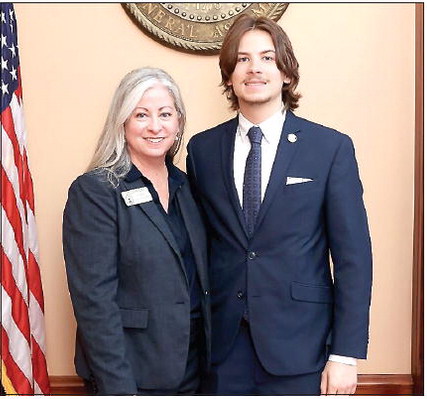
Henry Hagan made his fifth annual Spring Break trip to the Gold Dome. This year, he spent some of his time advocating for policy with Americans for Prosperity.
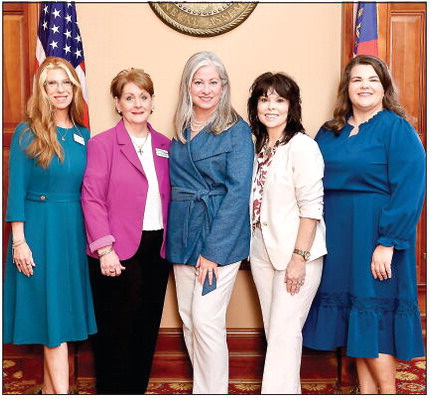
Heather Williams and Betty Dell Williams of the Refuge Domestic Violence Shelter spent a couple of days at the Capitol advocating for HB 1142, my bill that would create a domestic violence registry in Georgia, and Survivors Day at the Capitol.
We’re now in the seventh week of session. A full slate of committee meetings is scheduled to focus on reviewing legislation. These meetings are critical to ensuring priority bills are thoroughly vetted and passed out of committee, giving them the opportunity to be brought before the House for a vote. I encourage you to reach out with any questions or concerns regarding bills under consideration. Don’t hesitate to call or visit the Capitol to discuss issues that matter to you and your family. You can reach me via email at leesa.hagan@house.ga.gov. As always, thank you for the privilege of serving as your state representative.
Rep. Leesa Hagan and Henry Hagan
By Leesa Hagan R-Lyons (District 156, Georgia House of Representatives)