Leesa Hagan: - Budget Work Continues as the 2026 Session Moves Forward
Leesa Hagan:
The Georgia House of Representatives began the third week of the 2026 legislative session on January 26. We started the week a little later than planned after a winter storm swept across much of the state. By Tuesday, however, we were all back in Atlanta and hard at work. Much of that work happened in committee rooms instead of on the House floor, but it was meaningful. Budget Work Continues in the House With the joint hearings of the House and Senate Appropriations Committees now complete, the focus has shifted to the next phase. House Appropriations subcommittees have begun meeting to review specific sections of the budget in detail. Each subcommittee examines agency requests, gathers information, and evaluates funding needs.
This step matters because it turns broad proposals into practical decisions. Subcommittees will pass their portions of both the Amended Fiscal Year 2026 budget and the Fiscal Year 2027 budget. After that, the full House Appropriations Committee will consider each bill as a whole.
Once the House approves the budgets, they will move to the Senate for review. Senators will go through a similar process. If the House and Senate pass different versions, and they always do, conference committees will work out the differences. Only after both chambers agree will the budgets move to the governor for consideration.
As a member of the House Appropriations Committee, I stay focused on how budget choices affect rural Georgia. Funding decisions influence road maintenance, healthcare access, forestry management workforce training and more.
As Chairman of the House Rural Development Committee, I also look for alignment between budget priorities and long-term rural growth. Sustainable development requires planning, not guesswork. Budget work continues with that goal in mind. House Action on Fisheries and Water Policy While committees handled budget work, the House also moved forward on legislation. On Wednesday, we passed House Bill 443, the first House bill to pass this session. It addresses offshore fishing regulations through an annual endorsement fee.
HB 443 was requested by coastal fishermen who want better data on Georgia waters. The bill allows the state to conduct its own fishery surveys rather than relying solely on federal data. That distinction matters for managing resources responsibly.
Key elements of HB 443 include: An annual endorse ment fee of $10 for Georgia residents and a $20 annual fee for non-residents Revenue retained by the Department of Natural Resources Improved state-level fishery data collection Although this bill centers on coastal issues, resource management affects the entire state. Agriculture, forestry, and fisheries all depend on accurate data and responsible oversight.
The House also unanimously adopted House Resolution 1008, which ratifies updates to Georgia’s statewide water management plan. The original plan created regional water councils to address supply, quality, and conservation. Recent reviews showed that some councils struggled to function efficiently.
The updated plan reduces council size, adjusts terms, and ensures representation from major water users, including agriculture and industry. Water policy often stays out of the spotlight, yet it plays a direct role in economic development.
Education, Outdoors, and Housing Policy Updates Across the hall, the Senate gave final passage to Senate Bill 148, a bill carried over from last session. If signed by the governor, the bill will make several updates to public school policy.
SB 148 allows local school boards to offer hunting safety instruction for students in grades six through twelve. It also creates an outdoor learning center pilot program. As someone who believes learning does not stop at the classroom door, I appreciate that approach..
Property Tax Relief
Later in the week, Speaker Jon Burns announced House Bill 1116, the Georgia HOME Act of 2026. This proposal would phase out annual property taxes on primary residences by 2032 while giving local governments options to offset lost revenue. The bill was just filed, so it remains early in the process. Still, housing affordability affects both families and workforce stability, including in rural communities. Most of the communication I receive from constituents related to taxes is about their ever-increasing property tax assessments, I am proud to co-sponsor this legislation. As the bill moves through the process, I’ll keep you updated. Visitors to the Capitol
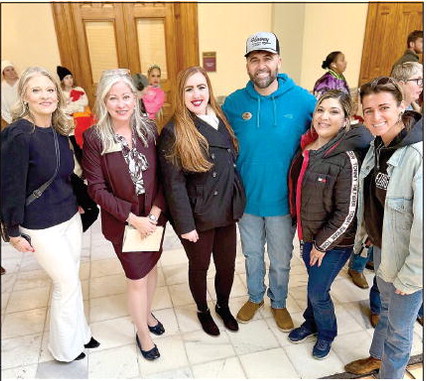
Last Wednesday was ARAD (Addiction Recovery Awareness Day) 2026! A group from Gardens of Hope RCO were there to help spread the word that recovery is real in Georgia.
Looking Ahead
As the session progresses, budget work continues alongside policy discussions in every committee. If you’d like to watch any of the meetings, you will find instructions on how to do so on my website at LeesaHagan. com. Furthermore, all House proceedings are open to the public, so I encourage you to plan a trip to the Capitol to see the legislative process as it happens.
Thank you for following along as this work continues and for allowing me to represent you in the legislature.
By Leesa Hagan R-Vidalia (District 156, Georgia House of Representatives)