


The Christmas Cactus That Wasn’t

Some of my earliest memories involve the screenedin porch at my Grandmother Jarriel’s house in Tattnall County. That’s where the “kids’ table” was located. I spent the first twelve years of my life eating out there with my young cousins, feeling quite unimportant and discarded and trying to figure out how I could make my way to a seat at the big table on the other side of the door—the table where the adults ate their meals and shared stories.
Three things defined that screened-in porch for me: the screen door with its long, stiff spring that slammed the door shut with a deafening bang no matter how gently you tried to close it; the sticky fly traps that spiraled from the ceiling; and the shelf next to our little table that held several potted Christmas cacti—or what I believed to be Christmas cacti.
When I became a newlywed in 1990, my grandmother broke off several limbs from one of her prized plants and sent me home with them. I carefully submerged those cuttings in potting soil and nursed them along until they took root. I still have mine, all these years later—a living connection to that screened porch and a woman (Ona Jarrard Jarriel) I loved to spend time with.
Today, I keep my cacti on the front porch during the warmer months, and when the weather forecasters predict the first frost, I bring them all indoors and find spots for them. Through the decades, I’ve done like my grandmother did, propagating more plants from that original gift and sharing them with friends and family. The blooms are a pale pink color, almost white, delicate as tissue paper. Each year between Thanksgiving and Christmas, my plants put on a show, producing dozens upon dozens of flowers that cascade downward with gentle color.
Now, while poinsettias remain the number one Christmas holiday gift plant, Christmas cacti—Schlumbergera bridgesii—are a close second. These plants have been kept as holiday treasures since the 1800s, passed down through generations like treasured heirlooms. There are some 300 hybrid varieties in various shades and combinations of white, pink, red, fuchsia, and more rarely, orange and yellow.
But here’s where my story takes a turn.
In recent years, I’ve learned that there are actually different cacti that bloom during the holiday season, and they’re not all Christmas cacti. The distinction lies in the leaves: Christmas cacti have flattened leaves with rounded teeth on the margins, while Thanksgiving cacti sport pointed, jagged teeth. There’s even something called an Easter cactus, blooming continued from page
later in the year, that has pointed teeth with fibrous hairs in the leaf joints.
I examined some photos online, then took a good, hard look at my own plants. And that’s when I made the revelation: My “Christmas cacti”—every single one I’ve cultivated and shared over the years—are actually Thanksgiving cacti! Those sharp, spiky-looking edges on the leaves are the giveaway.
Many of us know-italls in the family fancy ourselves armchair botanists, horticulturists and master gardeners, but we’ve been wrong all these years. Dead wrong!
I think it’s kind of like Coke. Coke is my family’s term for every dark carbonated soda in the refrigerator—Pepsi, RC, store brand sodas, etc. We call them all “Coke,” even though that’s wrong. Another example? Kleenex.
I doubt I’ll start calling my cactus plants by their proper name now. They will always be my Christmas cacti—the ones from Grandmother Jarriel’s screened porch, the ones that connect me to her memory, the ones that bloom faithfully each year during the holidays. Sometimes the stories we tell about our plants matter a whole lot more than their botanical accuracy.
But for now, my cacti sure are beautiful. You should see them. I think Grandmother Jarriel would be pleased.
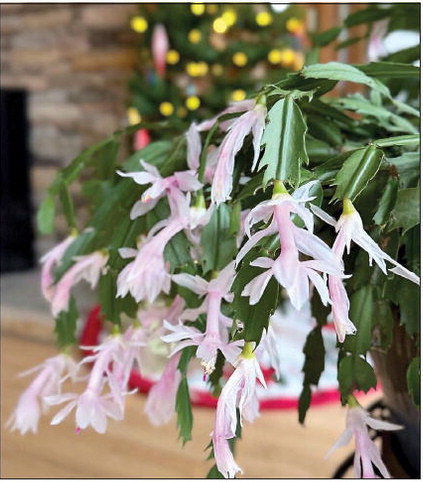
Pale Pink Cactus with Christmas Tree
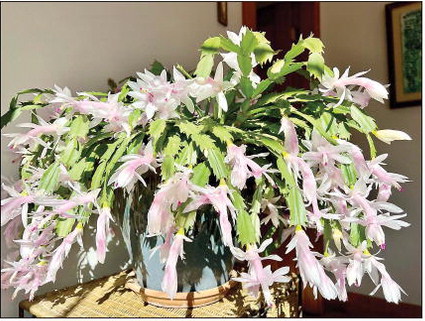
Amber’s Grandmother’s Cactus





out of
Posted on