

Loran - Smith
Loran
The University of Georgia’s new track is as spectacular as some of the athletes who have cast their lot with the Bulldogs because of the best opportunity to train to become world class performers.
It takes a stateof- the-art facility like the UGA Track and Field Complex to attract elite performers, and the Bulldogs, under Caryl Smith Gilbert, the first African American female head coach on campus, will recruit athletes who will bring high honor and national championship trophies to South Campus.
With the University Georgia being a land grant institution, that means that when the education process began in 1785, that there was plenty of land available for such schools, mainly because of the agricultural influence. The Morrill Act of 1862 designated 57 colleges as land grant institutions, Georgia being one of them.
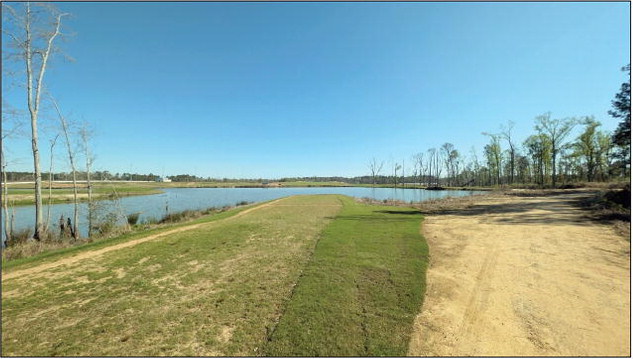
Undeveloped land which lay fallow for decades reflects that the UGA track facility comprises 37.24 acres, the biggest such plot of any University track facility in the country. This means there is abundant land for Phase II which will allow UGA to add an indoor facility at some point.
For example, Oregon which has been a pacesetter in track and field, has a track layout that comprises 18.17 acres. Track and field are immensely popular in California, but the track layout at the University of Southern California has a layout of only 4.92 acres. UCLA’s track facility comprises 11.71 acres.
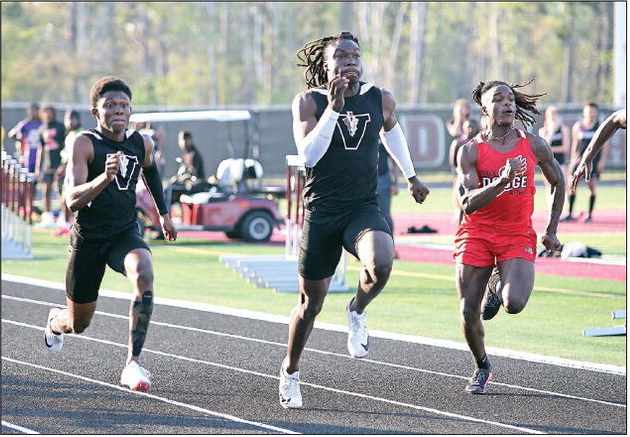
Texas and California are where you find the greatest number of high school track athletes, but Georgia is ranked fourth behind those two states and Florida. The East Coast is where you find some of the best track and field talent in the world.
It doesn’t matter where the talent is, the UGA track program appeals across all borders. Smith Gilbert, who is the coach of both the men’s and women’s teams, has already demonstrated that she not only can coach world class athletes, but she can also sell them on Athens and UGA.
The Georgia women won the national outdoor championship last June, a red-letter day for UGA and spirits are boosted when you realize that in the coming years, Georgia, often, will be the team to beat in national competition.
This facility and the prospectus for track at the University of Georgia will attract the best to come this way for higher education and world class competition and opportunity.
It will also be a boon to the sport of track in the state of Georgia. High School kids will want to come here for track meets and many will want to experience the opportunity of enrolling at UGA and furthering their educational and athletic career.
In addition to space for additions and upgrades, the Georgia track facility is as pristine as you will find such as the cross-country trail for distance training.
With this setting, you get a great feeling by not only having the greatest continued from page
training facility, but you are also enveloped in the most uplifting outdoor atmosphere. Run with the wind, listen to the birds’ chirrup, no smokestacks within 50 miles—this facility is first class and emotionally uplifting in every respect.
It was good to see that the name of the old track for Spec Towns, Georgia’s 1936 Olympic High Hurdles champion, carries forward with the new track.
His story will never not resonate. He was born with the perfect physical makeup for the high hurdles. An Augusta sportswriter lived next door to the Towns family and looked out a window at his home one day where he saw Spec’s father and an uncle with a fishing pole resting on the top of their heads. The younger Towns soon leaped over the pole which prompted the sportswriter to call the University of Georgia and informed them they should call on this young athlete post haste.
He was recruited to play football and distinguished himself at this rugged sport because his speed made him a valuable player for the defense. He didn’t worry about getting hurt or finding a negative to carp about—he was getting a free education to play a sport.
However, Weems Baskin, the track coach knew how great a talent Towns was. He had form, speed and intense competitive fire. Spec never lost in a dual meet because he was just too good. He was a fierce competitor who practiced with the greatest diligence. He became expert by placing a book of matches upright on the hurdles and learned to knock over the matches without ever hitting the hurdle.
In his day the high hurdles were substantial. You hit one and you likely crashed into the cinder track which was standard. What followed was weeping, wailing and gnashing of teeth.
Those hurdles were referred to as “T” hurdles which is what they looked like when they were inverted. In the fifties, technology brought about the “L” shaped aluminum hurdles. Coach Baskin once said that if Spec had competed on the “L” shaped aluminum hurdle “that he would have set records that never would have been broken.”
The first man to run the 110-yard-high hurdles in less than 14 seconds, Towns, following World War II, became Georgia’s track coach until retirement.
His time of :3.7 took place in Oslo, Norway after the Olympics. The official timers could not believe their stopwatches.